Advancing the science of muscular dystrophy
Over four decades, Kevin P. Campbell has led research on the mechanisms of muscle cell biology — with the goal of developing new treatment strategies
Muscular dystrophy refers to a group of inherited conditions that affect muscle structure and function. It causes progressive muscle weakness, reduced mobility, a shortened lifespan, and, in some cases, severe cardiac and respiratory complications and neurological impairment.
There are many different types of muscular dystrophy, which are caused by various gene mutations that disrupt the function of proteins required for maintaining the structure and stability of muscle cells. Unfortunately, there is no cure for the disorder, so current treatments primarily focus on slowing disease progression and managing patients’ symptoms.
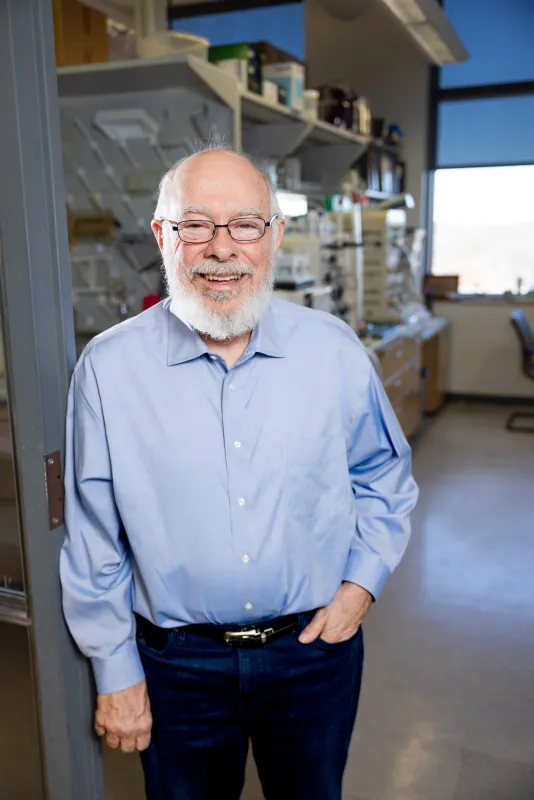
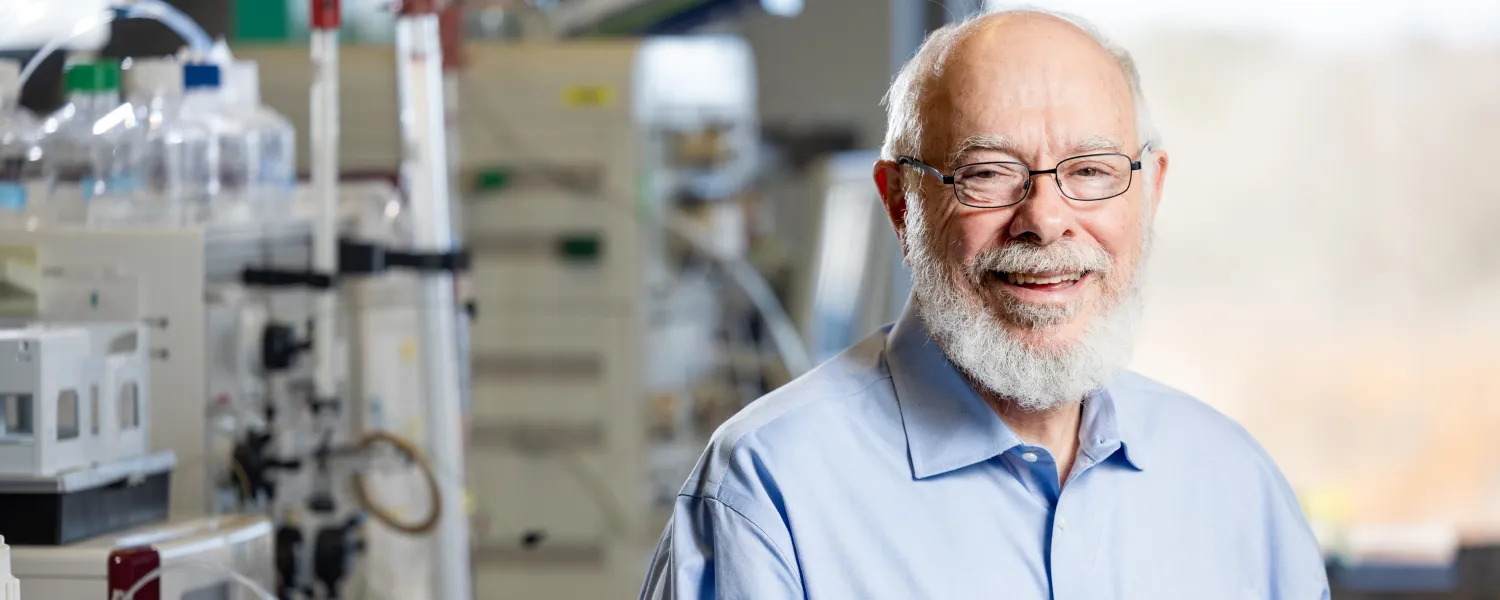
The complex set of conditions that give rise to muscular dystrophy is what Kevin P. Campbell, PhD, has devoted his career to studying at the University of Iowa — working with colleagues and trainees in his lab, and with scientists around the world, to better understand the disease and pave the way for improved therapies and potential cures.
“I like solving problems. For me, that’s what science is,” Campbell says. “And muscular dystrophy is a problem I want to solve.”
Campbell serves as the Roy J. and Lucille A. Carver Biomedical Research Chair in Molecular Physiology and Biophysics, and professor and chair of the Department of Molecular Physiology and Biophysics in the UI Carver College of Medicine. For more than four decades at Iowa, he has led and published groundbreaking research on muscular dystrophies. His discoveries on the mechanisms of muscle cell biology helped lay the foundation for new approaches that improved the diagnosis and treatment of the disease. This includes the development of gene therapy, which has shown success in restoring muscle strength and function in animal models. Based on his lab’s work, basic and translational scientists are moving closer to therapies that can correct or reverse the progression of muscular dystrophy.
An investigator emeritus with the prestigious Howard Hughes Medical Institute (HHMI), Campbell received HHMI support for his research from 1989 through 2024. As director of the Senator Paul D. Wellstone Muscular Dystrophy Specialized Research Center at the UI, he has been instrumental in establishing Iowa as a major center for the development and advancement of research on complex genetic disorders of muscle. He is a member of the National Academy of Sciences and the National Academy of Medicine, and he has earned international recognition and received numerous awards for his research — most recently, the August M. Watanabe Prize in Translational Research from Indiana University and the Louisa Gross Horwitz Prize from Columbia University.
Breaking down the dystrophin-glycoprotein complex
Born and raised in Brooklyn, New York, Campbell joined the faculty at Iowa in 1981 following a postdoctoral fellowship at the Banting and Best Department of Medical Research at the University of Toronto. He earned master’s and doctoral degrees in biophysics at the University of Rochester in New York. His postdoctoral training in Toronto laid the groundwork for his future studies on muscular dystrophy by providing him an opportunity to further study excitation-contraction coupling, the physiological process that links the excitation of muscles by the nervous system to their mechanical contraction.
At the UI, Campbell was able to connect his research interests in biochemistry and physiology.
“I was trained in biophysics to understand how muscle works,” he says. “At Iowa, our work in understanding its mechanisms led to the discovery of proteins involved in muscular dystrophy.”
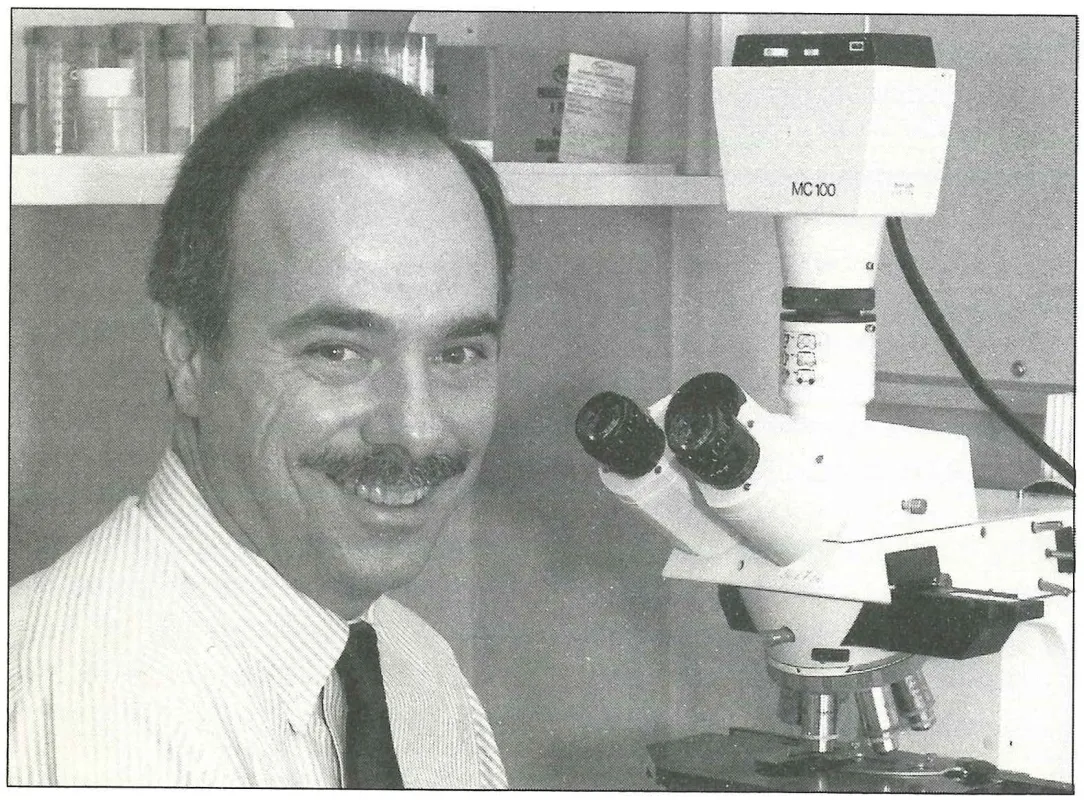
By the early 1990s, research from the Campbell lab delivered a critical understanding of the genetic and molecular defects in muscle cells that result in the symptoms experienced by patients with muscular dystrophy.
Specifically, the researchers discovered that dystrophin proteins form structural scaffolds with glycoproteins— proteins with sugar molecules attached to them. This scaffolding, known as the dystrophin-glycoprotein complex (DGC), keeps muscle cells structurally stable and protected, enabling the cells to withstand the stress of contracting and relaxing. Damage to or mutations in any of the DGC components can cause various muscular dystrophies, including Duchenne muscular dystrophy as well as other muscle diseases linked to the function of the DGC.
Beyond skeletal muscle, Campbell and his colleagues have broadened the scope of their research to enable an understanding of the function of the DGC in cardiac and smooth muscle as well as non-muscle tissues, such as the brain and peripheral nerve cells.
More recently, the Campbell lab has studied one of the crucial muscle glycoproteins within the DGC called alpha-dystroglycan (a-DG) and the genes involved in its synthesis and function.
“Over the past few years, we’ve learned a lot about how a specific sugar structure on a-DG is built and how it helps the protein attach to laminin, which is an important part of the muscle support network,” Campbell says. “But there’s still a lot we don’t know.”
The Campbell team is working to understand how a-DG is modified after it is made, what goes wrong in these steps in people with various types of muscular dystrophy, and how these problems affect the brain and nervous system.
“Proper modification of a-DG is important not just for muscle integrity but also brain development, tumor growth, and even certain viral infections. So, this work will help expand our understanding in other areas of biology and medicine,” he says.
Mentoring and motivating others on the ‘rush’ of biomedical science
One key to Campbell’s success and productivity is his commitment to supporting and mentoring graduate students and postdoctoral fellows who contribute to the lab’s discoveries. He received the 2005 Carver College of Medicine Distinguished Mentor Award for his dedication to the next generation of biomedical scientists and scholars — even though, early in his career, he tried to do everything himself.
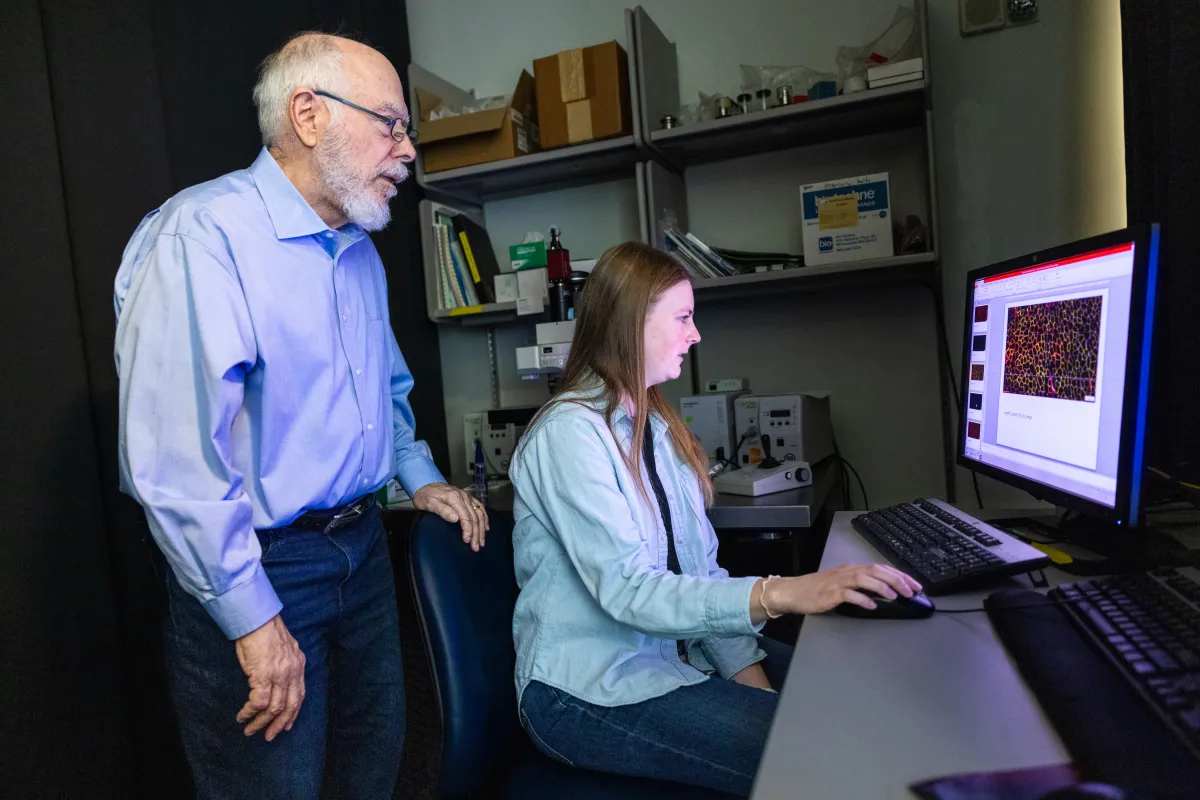
He recounts one summer years ago when one of his students offered to monitor the gels they were running — a common lab technique to separate biomolecules — over a weekend.
“He said to me, ‘You have little kids, why don't you stay home? I'll take care of the gels on Saturday,’” Campbell says. “He did, and on Monday, he came to me and was so excited about the results. And I realized that in science, to get people really motivated, you sometimes need to step aside and let people experience the thrill of discovery for themselves.
“As scientists, we're addicted to that rush you get when you see results,” he adds. “But if you give that to a young person, and they get it, you’ve got them hooked.”
Ronald Cohn, MD, president and CEO of the Hospital for Sick Children in Toronto, was a postdoctoral fellow in Campbell’s lab between 1998 and 2001, and he stays in touch with his former mentor. He admires Campbell’s approach to research and collaboration.
“You look at Kevin’s career and all the fundamental discoveries that he, with his laboratory, has helped us understand — not just about Duchenne muscular dystrophy but many other muscular dystrophies,” Cohn says. “You can only do that if you have that kind of special, creative, critical thinking. And to me, that's probably one of the main reasons for his success.
“I run a hospital, and I still do clinical work,” Cohn adds. “I still do some research, and the things I learned through those three years [in the Campbell lab], I’ve carried through my entire career and continue to carry through my day-to-day activities.”
Muscular dystrophy research on the horizon
The list of current research topics the Campbell’s lab is pursuing is extensive. One project involves looking for biomarkers, or measurable indicators, for muscular dystrophy. The lab is working with another group on a basic science approach to improve the use of adeno-associated vectors used in gene therapy.
“And we’re still working on understanding glycosylation [the process by which cells add sugar chains to proteins] where we’ve recently discovered some new things,” he says. “We have an exciting paper that’s being reviewed now.”
Campbell continues to find purpose and fulfillment in his work.
“I love what I do,” he says. “So, my plan is to keep on working to understand muscular dystrophy.”
Kevin P. Campbell
- Professor and chair, Department of Molecular Physiology and Biophysics
- The Roy J. Carver Biomedical Research Chair in Molecular Physiology and Biophysics
- Investigator emeritus, Howard Hughes Medical Institute
- Member, National Academy of Sciences
- Member, National Academy of Medicine
Recent awards:
- August M. Watanabe Prize in Translational Research, Indiana University
- Louisa Gross Horwitz Prize, Columbia University