Pella native returns to Iowa to care for patients with cancer
Justin Buzick, MD, finds a great sense of purpose serving Iowans in both urban and more rural areas as he begins his career at Mission Cancer + Blood, part of University of Iowa Health Care.
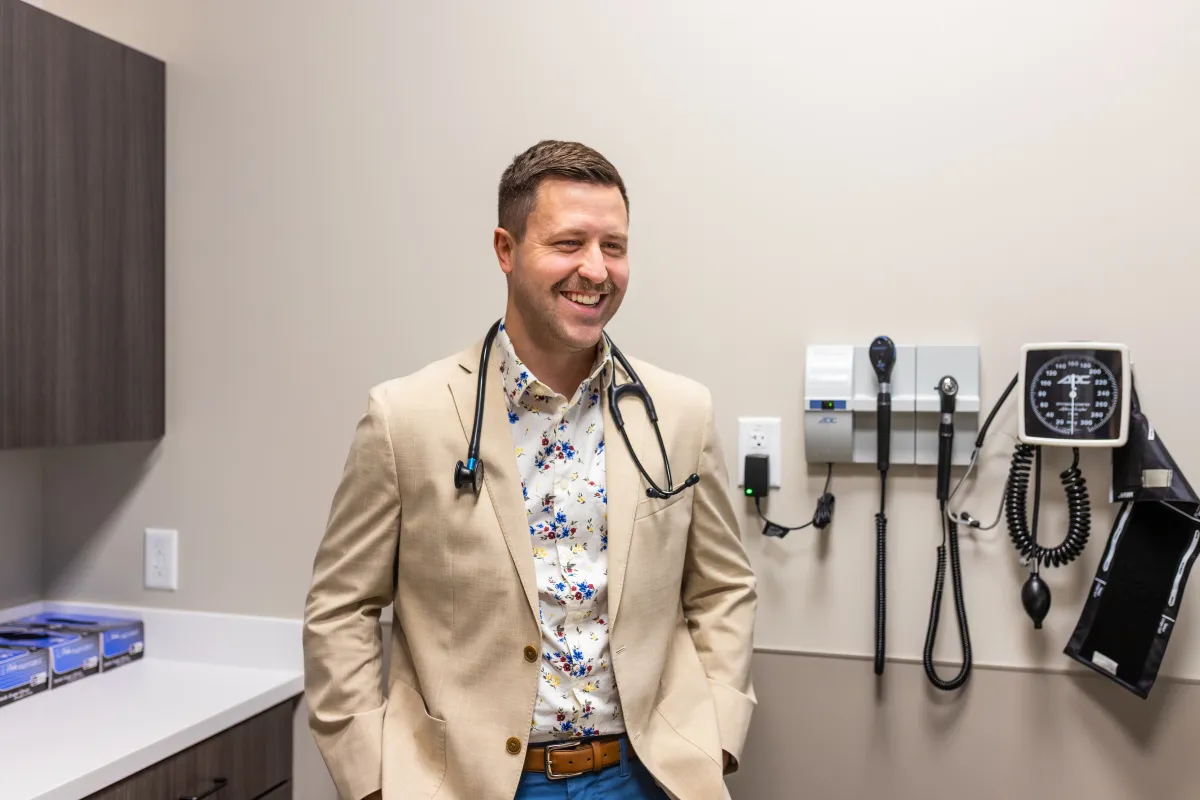
For Justin Buzick, MD, the decision to practice cancer care in Iowa wasn’t just a career move — it was a homecoming rooted in purpose.
Buzick is one of the newest physicians at Mission Cancer + Blood. He grew up in Pella, Iowa, and has long recognized the importance of rural health care.
“It’s always been important to me that states with more rural populations have access to care and homegrown providers,” Buzick says.
That belief – and a series of events early on in his life – quietly shaped his path, even as he ventured beyond Iowa for medical training in North Dakota.
After returning to Iowa to complete fellowships in hematology and medical oncology, and hospice and palliative medicine at UI Health Care, Buzick’s job search led him to Mission, despite several out-of-state job opportunities.
“Iowa will always be my home, and I’ve seen some of the challenges we face here in recruiting people to work in health care or stay after they finish training,” Buzick says. “It became apparent that I could take the excellent training I received at University of Iowa to help with some of these challenges we face as a largely rural state.”
Buzick says Mission stood out with its strong outreach network and a clear dedication to reaching patients across Iowa.
“I knew I wanted a community-based practice, and Mission fit that vision well,” he says.
Buzick now lives in Clive, part of the Des Moines metro, but spends at least one day a week seeing patients at Pella Regional Health Center, one of Mission’s rural outreach centers.
“Stepping into the Pella hospital now, all these years later, is a full-circle moment,” Buzick says. “I'm proud to be from Iowa and Pella, which has had a major part in shaping who I am as a person and a physician, and it gives me a great sense of purpose in giving back to the people there.”
Early experiences influenced his path
When Buzick was in high school, he volunteered at the front desk at Pella Regional Health. Though it felt like a “far-off dream,” he says the experience sparked his early interest in medical school.
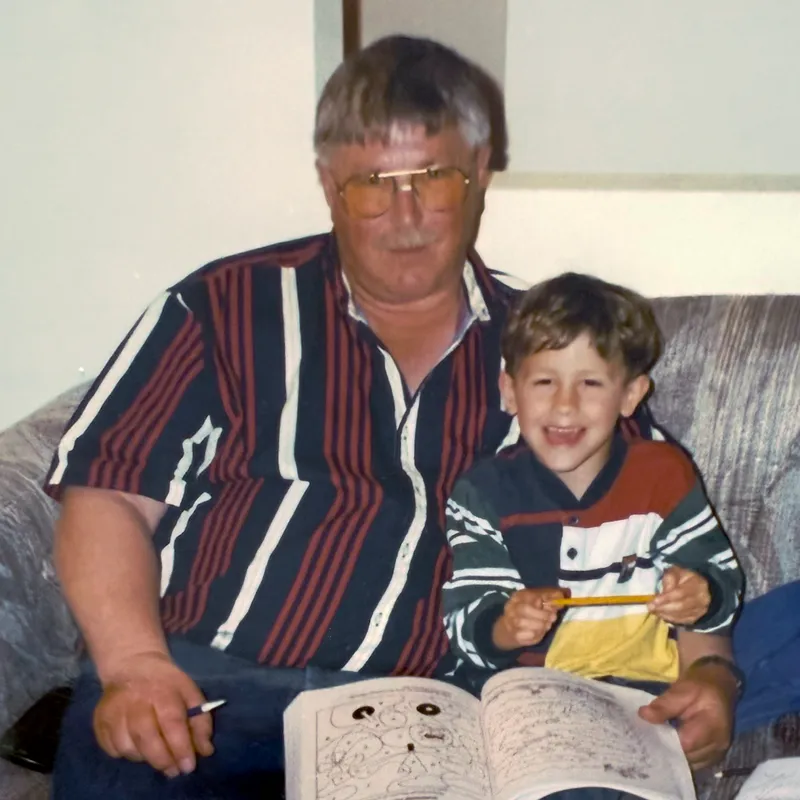
If those days behind the front desk inspired his dreams to become a doctor, it was a more personal moment that inspired Buzick to pursue oncology: when his paternal grandfather was diagnosed with lung cancer.
“I experienced the impact it had on my grandpa, as well as my grandma, my dad, and my aunt,” Buzick says. “While it was a difficult time for our family, the comfort and guidance from his various oncology providers always stuck with me.”
Buzick says it was meaningful to him to watch those providers develop a relationship with his grandpa, and how they were able to be a source of comfort during some of the darkest times.
“Looking back, his journey was definitely the impetus for my own, and I think he'd be incredibly proud of that legacy,” Buzick says.
Buzick described several other experiences as a “series of dominoes that steadily fell,” which eventually led him to pursue oncology. Science was a favorite subject throughout high school, particularly the science of cancer after his grandfather’s diagnosis.
While an undergraduate student at Wartburg College, he had the opportunity to get involved in a basic science project studying ovarian cancer cells and the signaling pathways that drive their growth.
“This was my first real exposure to how research could genuinely impact someone's life by leading to new breakthroughs with diagnosis and treatment,” Buzick says.
Intrigued, he went on to complete several oncology rotations during medical school at the University of North Dakota School of Medicine and Health Sciences, leading to more certainty that he wanted to pursue an internal medicine residency.
Coincidentally, his first rotation as an internal medicine intern was on the inpatient hematology and oncology unit at UI Health Care. That, combined with an attending oncologist he greatly respected sharing first-hand accounts of patient stories, made a lasting impression. He started to see how science and patient care could intersect meaningfully in a career.
Through every experience, Buzick kept getting signals that this was the path for him.
Providing care where it matters most
Throughout his training, and now as a practicing physician, Buzick has seen first-hand the impact that lack of access can have on someone’s health, and how delayed or sporadic care can sometimes result in outcomes that could have otherwise been prevented.
“With cancer in particular, rapid diagnosis and treatment are often paramount in determining whether someone can be cured of their disease,” Buzick says.
Buzick points out that for some patients, they are either unable or unwilling to travel to larger metropolitan areas to receive care. Being able to see patients in more rural areas of the state, like Pella, deepens the connection between patient and provider, and increases patients’ comfort level with their care.
“This was one of the most appealing aspects of working at Mission. The wide outreach net allows so many patients to receive care closer to home,” Buzick says.
At Mission, the final domino fell into place: Buzick gets to work with a large group of community oncologists, each of whom have a breadth of experience, while serving rural parts of Iowa that were integral to his upbringing, and remaining connected to UI Health Care and all the resources it provides.
When he thinks about what led him to the place he is now – that series of dominoes – he reflects, “It’s a little bit surreal. But I am so grateful for the opportunity to positively impact the lives of my patients during an incredibly difficult time."