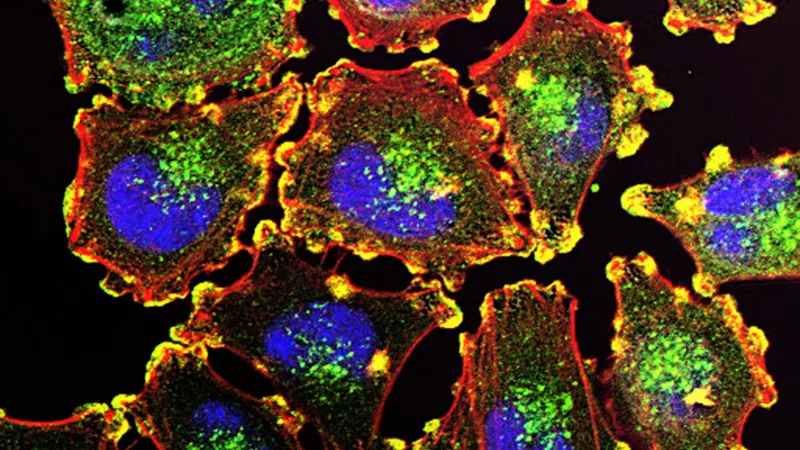
For decades, metastatic melanoma was one of the most challenging cancers to treat. Traditional therapies, like chemotherapy, showed limited success, especially in more advanced cases.
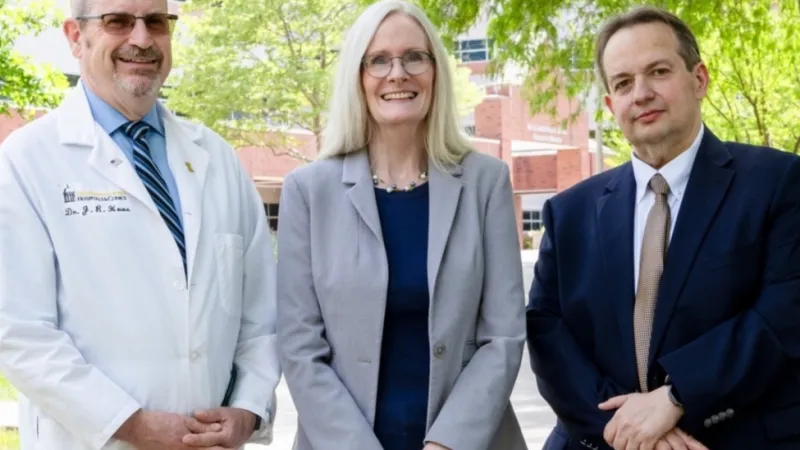
University of Iowa Health Care researchers have been awarded a five-year, $10.7 million Specialized Program of Research Excellence (SPORE) grant from the National Cancer Institute to study new, targeted therapies for neuroendocrine tumors (NETs), which are rare, slow-growing cancers that can arise almost anywhere in the body.
When teenagers and young adults with hip pain are seen by University of Iowa Health Care specialists in the Department of Orthopedics and Rehabilitation, they are also often struggling with mental health issues, including depression, anxiety, and fear of further injury when returning to sports.
Michael J. Welsh, MD, University of Iowa professor of internal medicine, has won the 2025 Lasker-DeBakey Clinical Medical Research Award for his fundamental research on cystic fibrosis (CF), which paved the way to new therapies that have transformed the health and life expectancy of people with CF.
Kanwal Singh Matharu, MD, assistant professor of ophthalmology and visual sciences in the Department of Ophthalmology and Visual Sciences at the UI Carver College of Medicine, has been awarded a Fulbright for fall 2025. He will collaborate with the Research Institute of Ophthalmology (RIO) in Giza, Egypt, to help improve research systems and strengthen international partnerships in eye care.
Kevin Campbell, PhD, professor and chair of molecular physiology and biophysics at the University of Iowa Roy J. and Lucille A. Carver College of Medicine, will receive the 2025 Louisa Gross Horwitz Prize from Columbia University.
Incoming medical student Troy Nation moved often as a kid, as his father was in the Marine Corps. Born in California, Nation also lived in Washington, Texas, Pennsylvania, Florida, and Japan before going to college in North Carolina. But his mom is originally from Iowa, so he came to see the state as a kind of home base.
University of Iowa researchers have successfully tested a technique that stimulates a gene to prevent craniosynostosis, a condition that causes infants’ skulls to close prematurely.
Craniosynostosis occurs when one or more joints between the bones of a baby's skull close prematurely, leaving a lack of space for the growing brain to expand. This can cause deformities in head shape and facial…
Incoming medical student Reese Rosenmeyer’s first introduction to a career in health care came from her mother, Jennifer, who is a nurse practitioner. Growing up in a small town, it was common for her mom to be stopped by thankful patients.