Jun. 19, 2024 | uihc.org
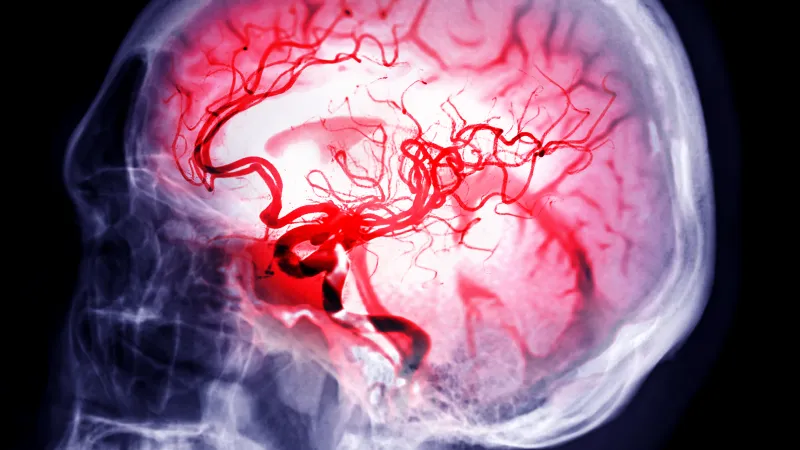
It started in 2015 with an occasional eye twitch. “It was that sort of twitch people get when they’re stressed or drink too much coffee,” John Mark Feilmeyer says. But the twitch then spread from his eye to the entire right side of his face, and it became almost constant. After seven years of trying various home remedies, getting Botox injections, and seeing a local neurologist, the Des Moines,…
Jun. 13, 2024 | uihc.org
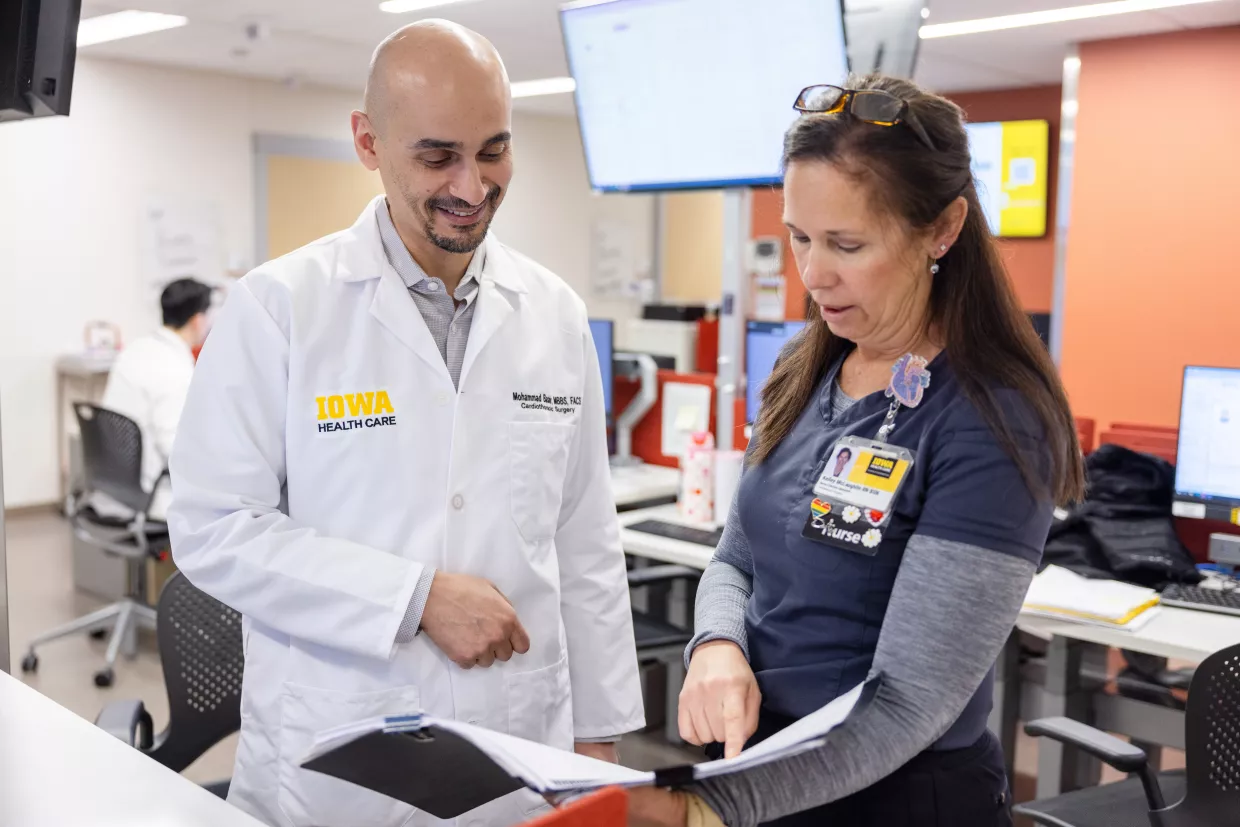
The energy of her workplace matters to Ashley Ventura. Two years into her career as a surgical technologist, she says the energy at University of Iowa Health Care is “unmatched.” Ventura, who is originally from California, says she has found a supportive culture working on the team involved in urology, gynecology, and transplant services. “I just love it here,” she says with her unmistakable…
Jun. 12, 2024 | uihc.org
Robotic surgery might sound like something from a science fiction movie, but using robots to assist with operations has been around for decades. Robotic surgery uses tools, such as saws, burs, or cutting blocks, that are attached to a robotic arm and controlled by the surgeon and the robot. The surgeon makes small additional cuts to insert pins into the bone. Attached to these pins are arrays…
Jun. 12, 2024 | uihc.org
People lying back in comfy chairs with their feet propped up and a Netflix show streaming on their phones. It sounds like a scene from a spa. There’s just one major difference though. They all have blood flowing out of their arms at the UI Health Care’s DeGowin Blood Center. It’s an experience that Sean McIntyre has become intimately familiar with as he’s given 254 blood product donations to UI…
Jun. 06, 2024
Over 3,000 babies are born each year at UI Health Care’s university campus, and that number continues to grow as access to maternal health care services across the state becomes more constrained.To improve patient access to maternal health services on university campus, UI Health Care is planning a 30,000 square-foot renovation of level 7 of the John Pappajohn Pavilion (JPP), pending approval of…
Jun. 06, 2024 | uihc.org
Patients of University of Iowa Health Care have another option for both same day care and primary care in the Quad Cities as a second urgent care opens and family medicine services are expanded. As the state’s only comprehensive academic medical system, UI Health Care continues to increase access to meet the care needs of Iowans. The walk-in urgent care clinic expands upon existing services at…
Jun. 05, 2024 | uihc.org
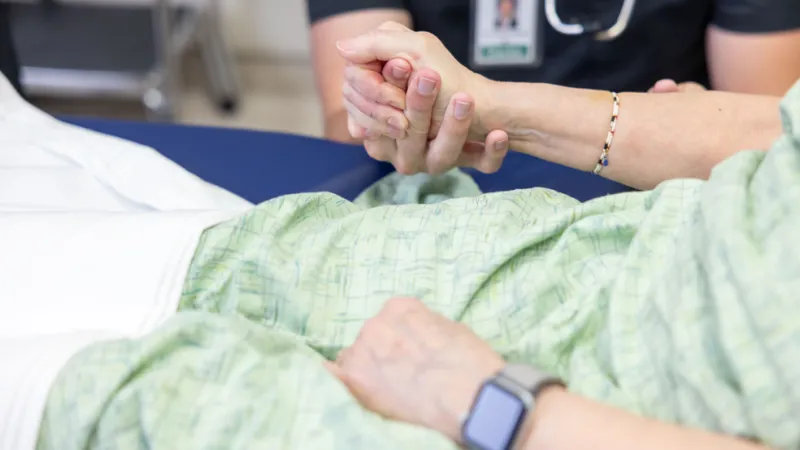
Exhausted, confused, and overwhelmed. Those were the words used to describe how one mother and her son felt when illness landed them in the hospital. But a promise made—and fulfilled—by their nurse Kayley Wallace helped both patient and mom feel comforted and cared for with dignity. Wallace, BSN, RN, CMSRN, has a strong focus on patient-family centered care on the medical/surgical unit at the…
May 29, 2024 | uihc.org
Atrial fibrillation (Afib) is the most common type of arrhythmia (irregular heartbeat). Because it can lead to blood clots and stroke, it's important to seek specialized and personalized treatment. Traditionally, the condition was treated with medication to either keep people in Afib and slow down their heart rate to a safe level, or to shift their heart back to a normal rhythm. While medications…
May 29, 2024 | uihc.org
When Alexina Teubel first got an MRI of her lumbar spine at her local health care provider, she was told she had a few minor disc protrusions but was fine otherwise. But Teubel, a professional track runner and cross-country and track and field coach at the University of Northern Iowa, knew the cause of her back pain was more severe. She’d been training to compete in the steeplechase at the 2022…
May 28, 2024 | uihc.org
Barbecues, baseball, ice cream, and … kidney stones? Every year, as spring gives way to summer, doctors know they’ll see more patients with symptoms of kidney stones. Severe pain in the back or abdomen, nausea, and blood in the urine can all be signs that a kidney stone may be moving through your system. But why would it be more likely to happen in the summer? University of Iowa urologist Ryan…