Building access for Iowa: How UI Health Care is advancing patient care through strategic investments
Updated facilities strategy shifts from new hospital tower to increasing access sooner for Iowans
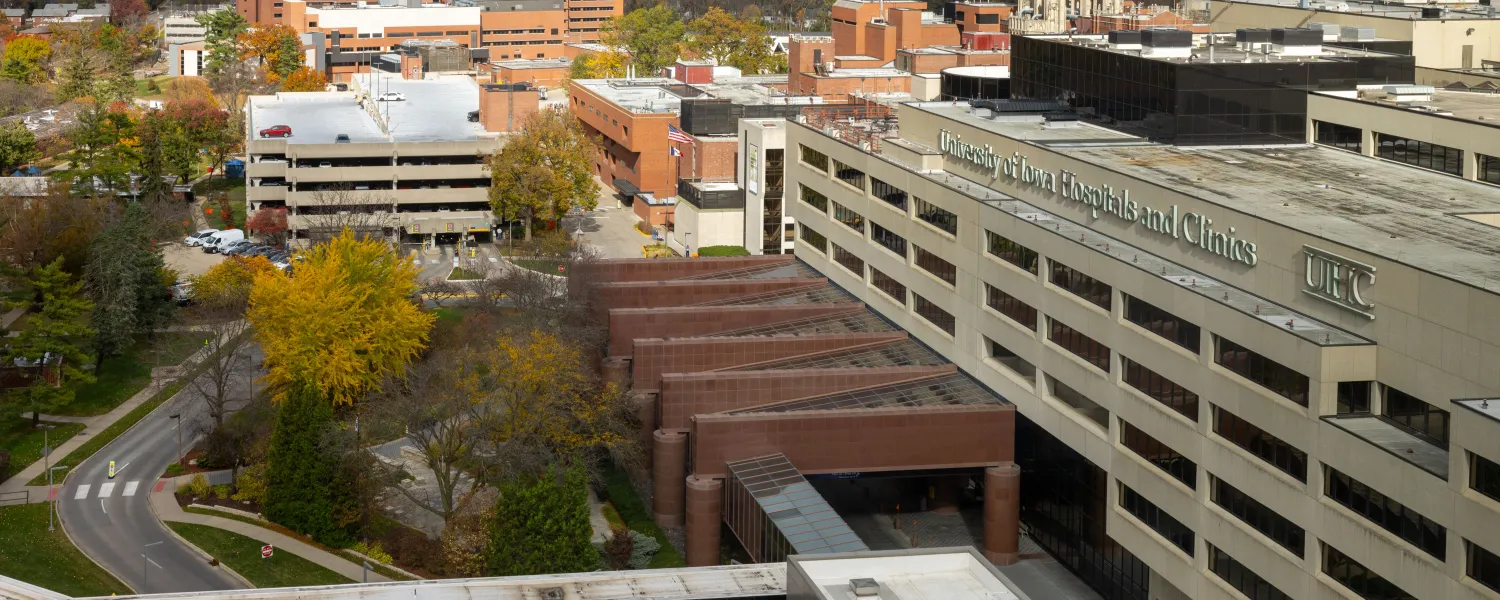
Patients from across Iowa continue to turn to University of Iowa Health Care. Last fiscal year alone, UI Health Care recorded more than 41,000 inpatient admissions, nearly 1.7 million clinic visits, and more than 43,000 major surgeries. Even with these record numbers, 3,000 to 5,000 patient transfers cannot be received by UI Health Care each year due to space constraints.
Meeting Iowans’ growing demand requires continued investment in facilities, technology, and clinical spaces that support patient care. At the same time, the health care industry overall is facing significant financial challenges that limit the amount of capital to responsibly invest in facilities. Hospitals and health systems across the country continue to face significant financial pressures driven by rising costs, workforce shortages, regulatory changes, and uncertainty in health care reimbursement.
UI Health Care is currently in a stable financial position. To plan responsibly for the future, UI Health Care leaders are making critical decisions on how best to use resources to serve Iowa’s greatest needs. In the September Iowa Board of Regents meeting, a revised capital plan will be reviewed.
“Our mission remains the same: improving the health and well-being of the people of Iowa,” says Denise Jamieson, MD, MPH, UI vice president for medical affairs and dean of the Carver College of Medicine. “The question before us was never whether we would continue investing in access. It was how to do so in a way that is sustainable, responsible, and for the greatest benefit to Iowans.”
Investing in access, faster
The proposed health care facilities strategy moves from constructing a new patient care tower on the university campus to instead modernizing and expanding existing spaces across the health system, specifically on the university and downtown campuses. This is the fastest and most financially responsible way to achieve health care access for Iowans given the anticipated financial challenges for health care. The revised approach does not allow UI Health Care to achieve everything planned in the tower, such as new operating rooms and other infrastructure needs, but it addresses important needs more quickly.
Because these improvements can be completed years earlier than a new tower, patients will benefit from expanded access sooner. While details of future projects are still being finalized, the updated approach is expected to add approximately 100 patient beds and serve an estimated 23,000 patients sooner, helping meet growing demand.
“When the university’s facilities master plan was developed five years ago, the health care environment looked much different than it does today,” says Brad Haws, MBA, CEO of the clinical enterprise. “As health care continues to face higher costs and lower reimbursement for its services, we have an obligation to shift our approach to be good stewards of resources to deliver the greatest impact in Iowa.
“Our new approach allows us to improve access in the pockets where it is needed most, such as intensive care units, and remain financially responsible in a rapidly changing health care environment,” says Haws. “We are also leaving room for continued ways to keep care local for Iowans through expanded specialty and cancer care access, better use of telehealth and care coordination across Iowa, while also working to strengthen the rural health care workforce.”
A proven model for expanding care
Recent investments across UI Health Care have demonstrated how renovation and modernization projects can increase capacity, improve patient experiences, and expand access to specialized care.
Recent examples include:
UI Health Care’s investments in the neonatal intensive care unit help Iowa's most vulnerable patients and their families receive highly specialized care in modern environments designed to support better outcomes and family-centered care.
The modernization and expansion of burn services has strengthened the state's capacity to care for patients with some of the most serious and complex injuries, helping Iowans receive highly specialized treatment close to home.
Significant investments in modernizing UI Health Care’s downtown campus, including the newly renovated 3 Center inpatient unit and upgrades to radiology services, help improve patient care and access for Iowans.
As a Level 1 trauma center for adult and pediatric patients, the emergency department on UI Health Care’s university campus is one of the busiest in Iowa. Renovations and expansion help create greater capacity and efficiency.
Considering current and future needs
Many of the enabling projects will continue to move forward. While the projects were initially planned together to make way for the patient care tower, they still serve to remove aging infrastructure and support traffic flow around the university campus.
These efforts include the water tower replacement and removal of the old tower, relocation of some health care services from the Wendell Johnson Speech and Hearing Center and Center for Disabilities and Development, and work on the Newton Road connections.
“We have a clear mission to serve Iowans across all 99 counties,” says Jamieson. “Our goal is to expand access and capacity now while ensuring UI Health Care remains prepared to meet the needs of Iowans for years to come.”